
Most of us want to continue living in a home that feels familiar, comfortable, and truly our own as we get older.
And with a little planning, that goal may be more achievable than you think.
Aging in place doesn’t mean pretending our needs will never change. It means recognizing that our homes—and some of the products we use every day—can evolve right along with us.
Something as simple as a better door handle, a well-placed grab bar, or a medication reminder can make everyday activities easier. Other improvements, such as an accessible shower or a lift chair, may become valuable as mobility or strength changes.
The key is choosing products that solve real problems rather than filling your home with equipment you may never need.
Here are seven types of aging-in-place products worth considering, whether you’re planning for yourself or helping someone you love remain safe and independent.
As an Amazon Associate, Age With Intent earns from qualifying purchases at no additional cost to you.
1. Accessible Entryway Products: Make Coming and Going Easier
Think about how often you enter and leave your home.
Now imagine navigating that same route while using a cane or walker, carrying groceries, or experiencing changes in balance or strength.
Even a couple of steps, a heavy door, or a poorly lit walkway can become an obstacle.
Fortunately, there are several ways to make your home’s entrances easier to navigate.
Helpful products and improvements
Motion-activated outdoor lighting
Good lighting makes it easier to see steps, uneven pavement, and other potential hazards after dark.
Motion-activated lights are particularly convenient because they illuminate an area automatically when someone approaches.
Solar-powered models can be useful in locations where adding electrical wiring would be difficult, although they shouldn’t be the only lighting for an essential entrance.
Lever-style door handles
Traditional round doorknobs require gripping and twisting, which can become difficult for someone with arthritis or reduced hand strength.
Lever handles are generally easier to operate and can be an inexpensive accessibility improvement.
Keypad or smart locks
Keyless entry eliminates the need to find, insert, and turn a small key.
Some models also allow you to create temporary access codes for trusted family members or caregivers.
Shop keypad door locks on Amazon →
Handrails and accessible ramps
Sturdy handrails can make steps safer to navigate. If stairs become a significant obstacle, a properly designed ramp may provide a more accessible entrance.
Ramps should be selected and installed with careful attention to slope, traction, landings, and applicable building requirements.
Learn more: Getting Out of the Car and Into the House Safely
Also helpful: Outdoor Solar Motion Sensor Lights for Safer Walkways
2. Bathroom Safety Products: Make Bathing Easier and More Comfortable
Bathrooms are among the most important areas to evaluate when preparing a home for aging in place.
Wet surfaces, hard flooring, high bathtub walls, and the movements involved in getting on and off the toilet can create challenges as balance or mobility changes.
The good news is that bathroom safety products have come a long way. Many modern options are attractive and blend naturally into a well-designed bathroom.
Helpful products and improvements
Grab bars
Properly installed grab bars provide stable support when stepping into a shower, standing up, or moving around the bathroom.
They should be securely attached to appropriate structural supports and installed in locations that suit the person using them.
Never assume an ordinary towel bar can safely support body weight.
Shop bathroom safety grab bars on Amazon →
Shower chairs and benches
A shower chair can make bathing easier for someone who has difficulty standing for extended periods.
A transfer bench may also help some people enter and exit a bathtub more safely, although the right equipment depends on the bathroom layout and individual needs.
Handheld showerheads
A handheld showerhead allows someone to direct the water while seated and may make bathing more comfortable and manageable.
Low-threshold or curbless showers
If you’re planning a bathroom renovation, consider whether replacing a traditional bathtub with an accessible shower makes sense.
A low-threshold or curbless shower may reduce the need to step over a high tub wall.
Raised toilet seats or toilet safety frames
For someone who has difficulty sitting down or standing up, appropriately selected equipment may make toilet transfers easier.
Before purchasing, make sure the product is stable, compatible with the toilet, and appropriate for the user’s mobility needs.
What about walk-in bathtubs?
Walk-in bathtubs can be appealing for people who enjoy soaking in a bath.
However, they’re not the right solution for everyone. Many require users to enter before filling the tub and remain seated until the water drains.
Consider the person’s mobility, transfer abilities, comfort, and bathroom layout before making a significant investment.
The goal isn’t to make a bathroom look like a healthcare facility. It’s to create a space that remains comfortable, attractive, and easy to use.
3. Grab Bars and Handrails: Add Support Where You Need It
Grab bars deserve their own category because their usefulness extends far beyond the bathroom.
A well-placed handhold can provide extra stability during everyday activities that involve reaching, turning, stepping, or changing positions.
Think about places where someone might instinctively grab a wall, countertop, or piece of furniture for support.
Those are often the places worth evaluating.
Where additional support may help
At entrances with steps or thresholds
Along stairways
Near a frequently used chair
In the bathroom
Near a garage entrance
In locations where dressing or changing shoes is difficult
Not every location needs a grab bar, and the appropriate placement depends on the individual’s abilities and the home’s layout.
An occupational therapist can help identify where additional support would be most beneficial.
What to look for
Choose products designed to support body weight, with secure mounting hardware and surfaces that are comfortable to grip.
Avoid relying on suction-cup grab bars as a primary weight-bearing support.
If you’re renovating, consider adding appropriate wall reinforcement where future grab bars may be needed—even if you don’t install them immediately.
Planning ahead can make future modifications easier and less expensive.
4. Smart Home Technology: Make Everyday Tasks Simpler
Smart-home technology can be particularly useful when it eliminates small tasks that become inconvenient or difficult.
And you don’t need to turn your entire house into a complicated technology system.
A few thoughtfully chosen devices can make a meaningful difference.
Helpful smart-home products
Smart speakers and displays
Voice assistants can help with reminders, timers, music, weather information, compatible device controls, and certain types of communication.
For someone with limited mobility or hand dexterity, voice control can be particularly convenient.
Shop smart displays on Amazon →
Smart lighting
Lights can be programmed to turn on at certain times or activated through motion sensors or voice commands.
This is especially useful for nighttime trips between the bedroom and bathroom.
Video doorbells
A video doorbell can allow you to see and communicate with a visitor without rushing to the front door.
Smart thermostats
Remote and voice-controlled temperature adjustments can make it easier to keep the home comfortable.
Smart plugs
Compatible lamps and other appropriate electrical devices can sometimes be controlled through schedules, apps, or voice commands.
Keep technology manageable
The best technology is the technology someone will actually use.
Before purchasing, consider whether the device requires a smartphone, internet connection, subscription, or ongoing technical support.
And remember that smart-home devices shouldn’t replace reliable ways to access the home, turn on essential lights, or summon emergency assistance.
Learn more: Smart Home Technology for Seniors: Making Aging in Place Safer and Easier
5. Power Lift Recliners: Make Sitting and Standing Easier
A favorite chair should be comfortable.
But if getting out of it becomes difficult, that same chair can start to create frustration or safety concerns.
A power lift recliner uses a motorized mechanism to gradually raise and tilt the seat forward, helping the user transition toward standing.
For some people with reduced leg strength or mobility limitations, this can make sitting down and standing up more manageable.
What to consider before buying
Seat height and depth
A chair that’s too deep or too tall can be difficult to use, even if it includes a lift mechanism.
Weight capacity and sizing
Choose a model appropriate for the user’s body size and weight.
Controls
The remote should be simple to understand and operate.
Fabric and maintenance
Consider comfort, durability, and ease of cleaning.
Power outages
Some models have battery backup features. Check what functions remain available if the power goes out.
Is a lift chair right for everyone?
Not necessarily.
If someone is beginning to have difficulty rising from a chair, it’s worth exploring why.
Sometimes a properly sized chair with supportive armrests is enough. In other situations, strength training, physical therapy, or medical evaluation may be appropriate.
A lift chair can be helpful, but it shouldn’t automatically replace opportunities to maintain strength and mobility when those activities are safe and appropriate.
Related reading: Strength Training for Seniors: Benefits, Exercises, and Safety Tips
6. Meal Delivery Services: Make Healthy Eating More Convenient
Not every aging-in-place solution is a piece of equipment.
Sometimes maintaining independence means finding easier ways to manage everyday responsibilities.
Meal delivery services are a good example.
Shopping, carrying groceries, standing to prepare meals, and cleaning up afterward can become tiring or difficult.
For someone living alone, preparing a complete meal for one person may also feel like more work than it’s worth.
Meal services can help reduce that burden.
Different types of meal services
Fully prepared meals
These arrive ready to heat and eat, with little or no cooking required.
They may be helpful for someone who finds meal preparation physically demanding.
Meal kits
Meal kits provide ingredients and instructions for preparing meals at home.
They can reduce shopping and planning while still allowing someone to enjoy cooking.
However, they generally require more preparation than fully cooked meals.
Community meal programs
Local senior centers, community organizations, and programs such as Meals on Wheels may provide meal delivery or other nutrition assistance for eligible older adults.
Availability and eligibility vary by location.
What to consider
Before selecting a service, compare:
Cost per meal, including shipping
Portion sizes
Nutritional information
Dietary options
Ease of preparation
Storage requirements
Delivery schedules
Cancellation policies
For someone with specific medical dietary needs, it’s important to confirm that the meals are appropriate rather than assuming a service marketed to older adults will meet every requirement.
Convenience matters, but nutrition and affordability matter just as much.
7. Medication Organizers and Automatic Pill Dispensers: Simplify Daily Routines
Managing medications can become complicated, particularly when someone takes several prescriptions on different schedules.
Remembering whether a medication has already been taken can also be a concern.
The right medication-management system can help create a more consistent routine.
Basic pill organizers
Traditional pill organizers are inexpensive and may work well for someone who manages medications independently but wants a clear way to organize daily doses.
Some include separate morning, afternoon, evening, and bedtime compartments.
Medication reminder systems
Phone alarms, smart speakers, medication apps, and dedicated reminder devices can provide prompts at scheduled times.
These can be helpful when the main challenge is remembering when medication is due.
Automatic pill dispensers
More advanced devices can dispense scheduled doses, use audible or visual reminders, and sometimes notify a designated caregiver when a dose appears to have been missed.
These systems may be particularly helpful when medication schedules are complex or when additional support is needed.
However, they have limitations.
Some medications require special storage, packaging, or administration. Not every medication is suitable for an automatic dispenser.
And a dispenser cannot guarantee that medication has actually been swallowed.
If you’re considering one, review the system with a pharmacist or healthcare professional and make sure the medication schedule is entered correctly.
Shop automatic pill dispensers on Amazon →
Learn more: Benefits of Using an Automatic Pill Dispenser
Also helpful: Tips for Organizing Medications
How to Decide Which Aging-in-Place Products You Actually Need
After reading a list like this, it can be tempting to start buying products immediately.
I would recommend a different approach.
Start by walking through your home and paying attention to the things you do every day.
Ask yourself:
Are there any areas where I feel unsteady?
Is getting into or out of the house becoming difficult?
Are bathroom activities comfortable and safe?
Do I struggle with any doors, switches, or controls?
Is getting up from furniture becoming harder?
Are meal preparation or medication routines creating frustration?
Are there improvements I could make now that would help in the future?
Then prioritize the changes that address your biggest concerns.
You may discover that better lighting and a few grab bars are all you need right now.
Or you may decide to plan a bathroom renovation while you’re still able to make choices without the pressure of an immediate need.
Both approaches make sense.

Consider a Professional Home Safety Assessment
If you or someone you care about has experienced falls, increasing mobility challenges, or difficulty managing everyday activities, a professional home safety assessment may be worthwhile.
An occupational therapist can evaluate how someone moves through the home, performs daily tasks, and interacts with the environment.
That can help identify practical changes based on actual needs rather than assumptions.
It may also prevent spending money on products that aren’t appropriate or won’t solve the underlying problem.
Aging in Place Is About More Than Products
The right products can help make a home safer and more comfortable.
But successful aging in place also involves staying physically active, maintaining social connections, managing health needs, and planning for the future.
It’s about creating a lifestyle and environment that continue to support your independence.
And it’s worth remembering that needs change.
A product that’s helpful today may not be the right solution five years from now. That’s why flexibility, thoughtful planning, and periodic reassessment are so important.
You don’t need to prepare for every possible challenge at once. You simply need to make decisions that help your home continue working for you.
Start With One Thoughtful Improvement
If there’s one thing I’d encourage you to take away from this article, it’s that aging in place doesn’t have to involve expensive renovations or a house full of specialized equipment.
Sometimes the most meaningful improvements are surprisingly simple.
A better light.
An easier door handle.
A secure handrail.
A more manageable medication routine.
Small changes made thoughtfully can help preserve comfort, confidence, and independence.
And that’s what Age With Intent is all about.
Keep Planning for a Safer, More Independent Future
Want more practical ideas for making your home and lifestyle work for you as you get older?
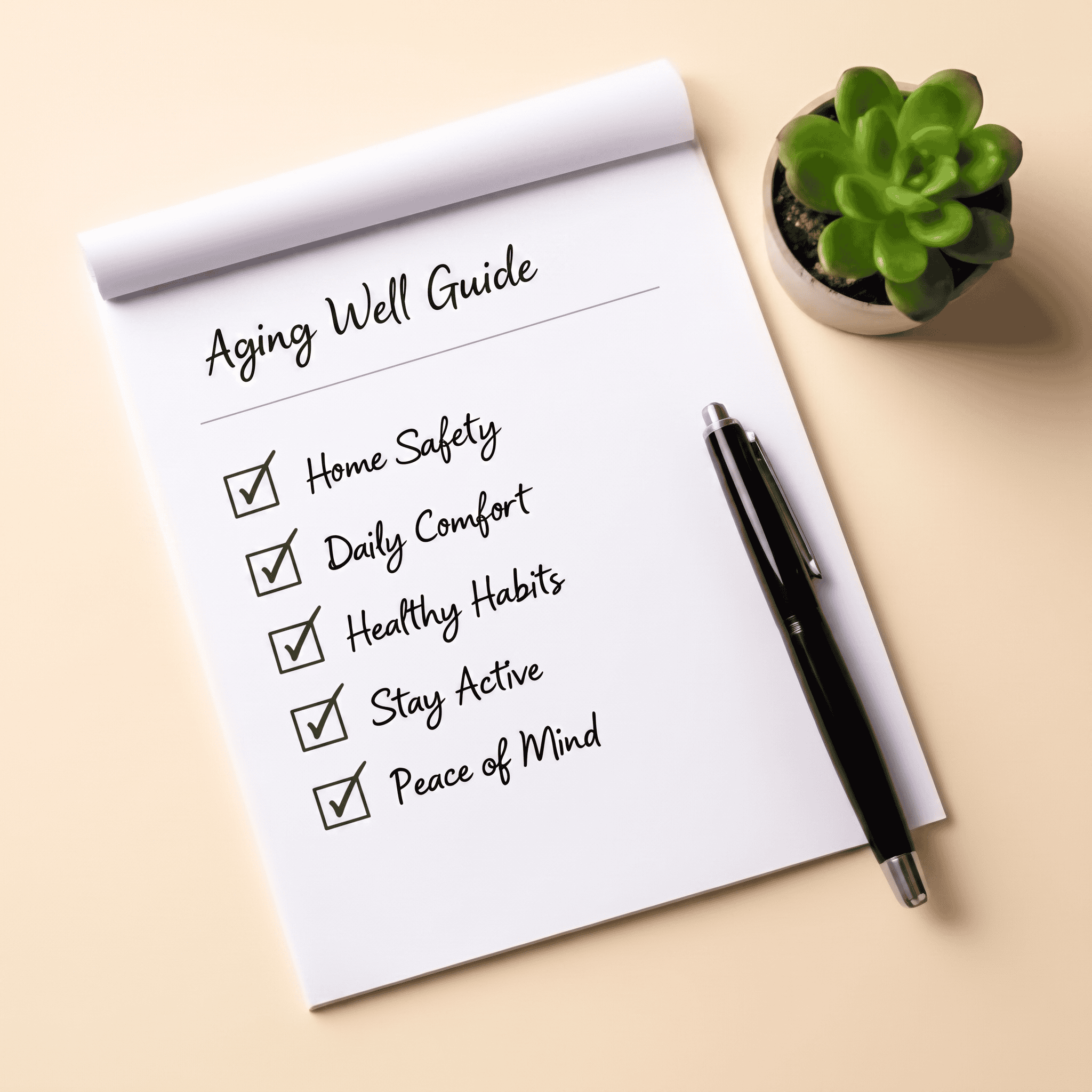
Download our free Age With Intent Aging Well Guide.
It includes helpful strategies for home safety, staying active, healthy living, and planning ahead—so you can make decisions with greater confidence.
Get Your Free Aging Well Guide →
Sources & Further Reading
National Institute on Aging (NIA) — Aging in Place: Growing Older at Home
National Institute on Aging (NIA) — Home Safety Tips for Older Adults
Centers for Disease Control and Prevention (CDC) — Older Adult Fall Prevention
About the Author
I’m Heather, founder of Age With Intent. I have more than 25 years of experience in long-term care leadership, including over 15 years as a Nursing Home Administrator.
Throughout my career, I’ve seen firsthand how important safety, independence, and thoughtful planning are to aging well.
I created Age With Intent to share practical information and resources that help older adults and their families make informed decisions, maintain independence, and live well at every stage of life.