A fall can happen in seconds, but its effects may last much longer. An injury can interfere with mobility, confidence, and the ability to live independently. The encouraging news is that many falls can be prevented with practical changes to your home, health, and daily habits.
According to the Centers for Disease Control and Prevention, more than 14 million adults age 65 and older—approximately one in four—report falling each year. Falls are also the leading cause of both fatal and nonfatal injuries among older adults. The age-adjusted fall death rate among adults 65+ increased 21% from 2018 to 2024.
However, falling is not an inevitable part of getting older. Improving lighting, clearing walking paths, installing support where it is needed, reviewing medications, and maintaining strength and balance can all reduce your risk.
Use this room-by-room fall prevention checklist to identify potential hazards and decide which changes should come first.
This article is for general educational purposes and is not a substitute for individualized medical advice. Speak with your healthcare provider about changes in balance, dizziness, weakness, or other concerns about falling.
As an Amazon Associate Age With Intent earns from qualifying purchases.
Begin With the Paths You Use Every Day
Before looking at individual rooms, walk through your home as though you were seeing it for the first time.
Pay particular attention to the route between your bedroom and bathroom, the path from your favorite chair to the kitchen, and the area between your driveway and entrance. These familiar routes are often traveled while carrying something, moving quickly, or walking in low light.
Look for:
- Clutter, cords, shoes, or pet toys in walking paths
- Loose rugs or uneven flooring
- Narrow spaces between furniture
- Poorly lit hallways and corners
- Changes in floor height or unexpected thresholds
- Furniture that moves when you use it for support
- Frequently used items stored too high or too low
A safe home does not have to look institutional. Many fall-prevention improvements—better lighting, secure flooring, thoughtfully placed furniture, and attractive railings—can make a home safer and more comfortable without changing its character.
Entryways, Steps, and Outdoor Walkways
Fall prevention begins before you enter the house. Rain, snow, ice, wet leaves, uneven pavement, and poorly lit steps can all make an entrance hazardous.
Entryway safety checklist
- Keep walkways clear of leaves, snow, ice, hoses, tools, and debris.
- Repair cracks, loose stones, and uneven sections of pavement.
- Install sturdy railings on outdoor steps, ideally on both sides.
- Make sure railings extend far enough to be reached before stepping up or down.
- Use bright exterior lighting that covers the walkway, steps, and door.
- Consider motion-activated lights so the area illuminates automatically.
- Use a thin, slip-resistant doormat with edges that lie flat.
- Add reflective or contrasting tape to make step edges easier to see.
- Keep salt, sand, or ice melt near the door during winter.
- Place a bench or stable chair near the entrance if you need to sit while changing footwear.
- Avoid carrying so many bags that you cannot see the ground or hold the railing.
Read more in our article: Getting Out of the Car and Into the House Safely.
Living Room and Family Room
The living room is comfortable and familiar, but it often contains cords, rugs, low tables, and furniture arranged around appearance rather than safe movement.
Living-room safety checklist
- Arrange furniture to create wide, unobstructed walking paths.
- Remove small tables, plant stands, or decorative items that extend into those paths.
- Secure electrical cords along walls rather than running them across the floor.
- Remove throw rugs or secure them with a quality nonslip backing.
- Make sure the edges of larger rugs remain flat.
- Keep pet toys, blankets, magazines, and other clutter off the floor.
- Choose chairs that are stable and easy to get into and out of.
- Avoid chairs that are very low, overly soft, or able to slide backward.
- Keep a lamp within reach of your favorite chair.
- Avoid walking across a dark room to reach the light switch.
- Keep your phone or medical alert device close by.
Never rely on a lightweight table, rolling chair, or unstable piece of furniture for balance. If you regularly need to push or pull on something when standing, consider whether a firmer chair with arms would be safer.
Kitchen
Reaching, bending, climbing, carrying hot food, and moving across potentially wet floors can all contribute to kitchen falls.
Kitchen safety checklist
- Store frequently used dishes, cookware, and food between waist and shoulder height.
- Avoid climbing on chairs, counters, or overturned containers.
- If you must reach a higher shelf, use a sturdy step stool with a handrail.
- Clean spills as soon as they happen.
- Keep the floor free of bags, pet bowls, and loose mats.
- Use nonslip backing under any mat that remains in the kitchen.
- Provide bright, even lighting over counters, the sink, and the stove.
- Keep frequently used appliances within easy reach.
- Avoid carrying more than you can safely manage in one trip.
- Use a rolling cart only if it is stable, appropriate for the task, and will not move unexpectedly when leaned upon.
- Sit at a table for food preparation if standing causes fatigue or unsteadiness.
Reorganizing cabinets is one of the simplest no-cost fall-prevention projects. If an item is used every day, you should not have to climb, stretch excessively, or bend to the floor to reach it.
Bedroom
Falls in the bedroom frequently happen when getting out of bed, dressing, or walking to the bathroom during the night.
Bedroom safety checklist
- Keep a lamp or easy-to-reach light control beside the bed.
- Install night-lights along the route to the bathroom.
- Keep the floor clear of clothing, shoes, cords, and bedding.
- Arrange furniture so there is a clear path on both sides of the bed when possible.
- Make sure the bed is at a comfortable height for sitting and standing.
- Keep eyeglasses, a phone, and any mobility aid within reach.
- Sit on a stable chair while putting on pants, socks, or shoes.
- Avoid standing on one foot to get dressed.
- Choose supportive slippers with nonslip soles and secure backs.
- Avoid walking in loose socks, especially on wood or tile floors.
When getting up during the night, turn on a light and take a moment before walking. If you feel dizzy when changing positions, sit on the edge of the bed until you feel steady and discuss the symptom with your healthcare provider.
Bathroom
The bathroom deserves special attention because wet surfaces, small spaces, and the need to step, turn, and lower or raise the body can occur together.
Bathroom safety checklist
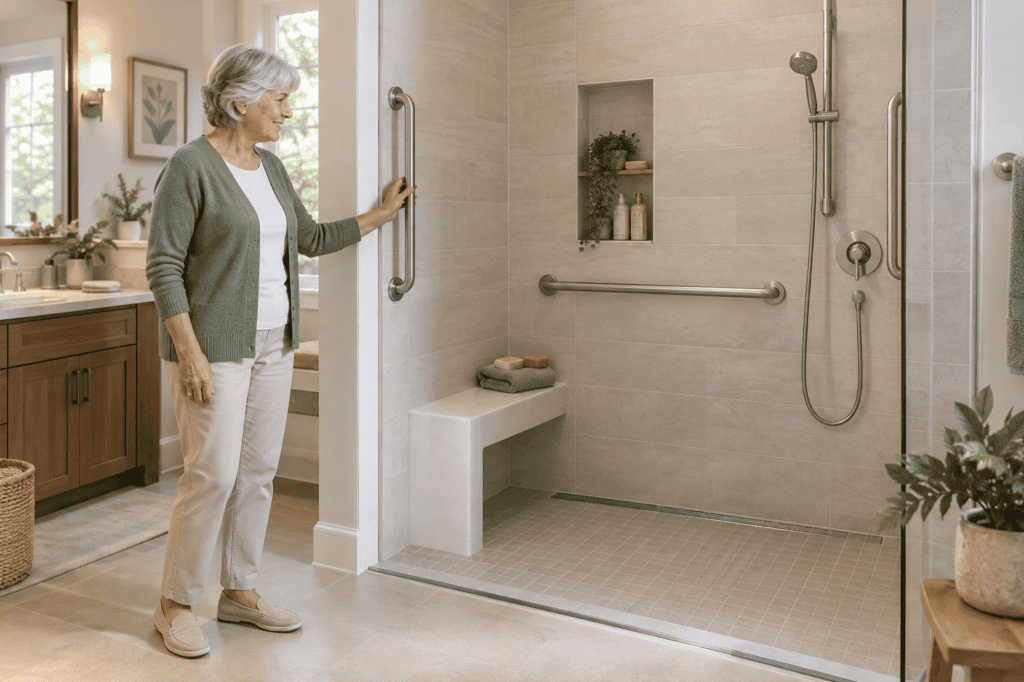
- Install securely anchored grab bars near the toilet and inside the bathing area.
- Do not rely on a towel bar for support.
- Treat suction-mounted grab bars as balance reminders, not as substitutes for properly installed support bars.
- Use a nonslip surface inside the shower or bathtub.
- Place a slip-resistant mat outside the bathing area.
- Remove loose decorative rugs.
- Consider a shower chair or transfer bench if standing is tiring or unsteady.
- Use a handheld showerhead to make seated bathing easier.
- Keep soap, shampoo, and towels within comfortable reach.
- Consider a raised toilet seat or toilet safety frame if sitting and standing are difficult.
- Make sure there is adequate lighting for nighttime bathroom visits.
- Clean up water immediately.
- Consider replacing a high bathtub wall with a low-threshold or zero-entry shower during a future renovation.
Grab bars should be positioned for the person who will use them and fastened into appropriate wall supports. An occupational therapist, aging-in-place specialist, or qualified installer can help determine the safest placement.
Hallways and Stairs
Stairs can become dangerous when lighting is poor, items are carried in both hands, or the edge of each step is difficult to distinguish.
Stairway and hallway safety checklist
- Install secure handrails on both sides of the stairs when possible.
- Make sure the full staircase is well lit.
- Place light switches at both the top and bottom.
- Repair loose, uneven, or damaged steps.
- Secure carpeting firmly to every step.
- Remove objects from stairs immediately rather than leaving them to carry later.
- Add contrasting tape to step edges if depth perception is a concern.
- Avoid patterned carpeting that makes individual steps difficult to distinguish.
- Keep hallways clear of furniture and stored belongings.
- Use night-lights that illuminate the entire route.
- Never rush to answer the telephone or door.
Carry only what allows you to see the steps and keep one hand on the railing. If you routinely need to carry laundry or other items between floors, consider keeping essential supplies on each level.
Laundry Room, Basement, and Garage
Utility areas often have uneven flooring, limited lighting, stored objects, and frequently used items that are difficult to reach.
Utility-area safety checklist
- Improve lighting at the top and bottom of basement stairs.
- Keep stairs and walking paths free of storage.
- Secure or remove loose mats.
- Clean up water, oil, and other spills promptly.
- Store laundry products and tools within easy reach.
- Avoid carrying an overflowing laundry basket that blocks your view.
- Consider a smaller basket or multiple trips.
- Coil extension cords, hoses, and charging cables when not in use.
- Install sturdy shelving so belongings are not stacked on the floor.
- Keep frequently used items away from very high or very low shelves.
- Wear supportive footwear rather than loose slippers in the garage or basement.
These spaces are easy to overlook because they may not be part of the main living area. If you use them regularly, include them in every home safety review.
Fall Prevention Is About More Than the Home
Removing hazards is important, but your surroundings are only one part of fall prevention. Balance, strength, vision, health conditions, medications, and footwear can also affect your risk.
Why Most Falls Have More Than One Cause
Falls often don’t have a single cause. According to the CDC, most falls happen because several risk factors come together, and the more risk factors a person has, the greater the chance of falling.
Consider a simple example: A loose rug may not cause a fall on its own. But combine that rug with reduced leg strength, poor lighting, a medication that causes dizziness, or difficulty with balance, and the risk can increase.
That’s why effective fall prevention means looking beyond any one solution. Making your home safer is an important first step, but it’s equally important to consider factors such as strength and balance, medications, vision, footwear, and overall health.
The encouraging part is that many fall risk factors can be changed. Addressing several small risks at the same time can create multiple layers of protection—helping you move through your home and daily life with greater safety and confidence.
Review your medications
Some prescription medicines, over-the-counter products, and combinations of medications can cause dizziness, drowsiness, blurred vision, confusion, or a drop in blood pressure.
Ask your physician or pharmacist to review everything you take, including sleep aids, allergy products, supplements, and medications prescribed by different providers. Do not stop a medication on your own.
If keeping track of medications has become difficult, read about the benefits of using an automatic pill dispenser.
Have your vision and hearing checked
Changes in vision can make it harder to see steps, obstacles, and changes in flooring. Bifocals or progressive lenses can sometimes affect depth perception when navigating stairs.
Hearing also contributes to awareness of your surroundings. Keep routine appointments and tell your provider if you notice a change.
Choose safer footwear
Wear shoes that fit properly and have low heels, supportive backs, and nonslip soles. Avoid shoes that are loose, overly worn, or difficult to keep securely on your feet.
Going barefoot may not be safe if you have reduced sensation, foot pain, or slippery floors. Socks without nonslip grips can be particularly hazardous on smooth surfaces.
Maintain strength and balance
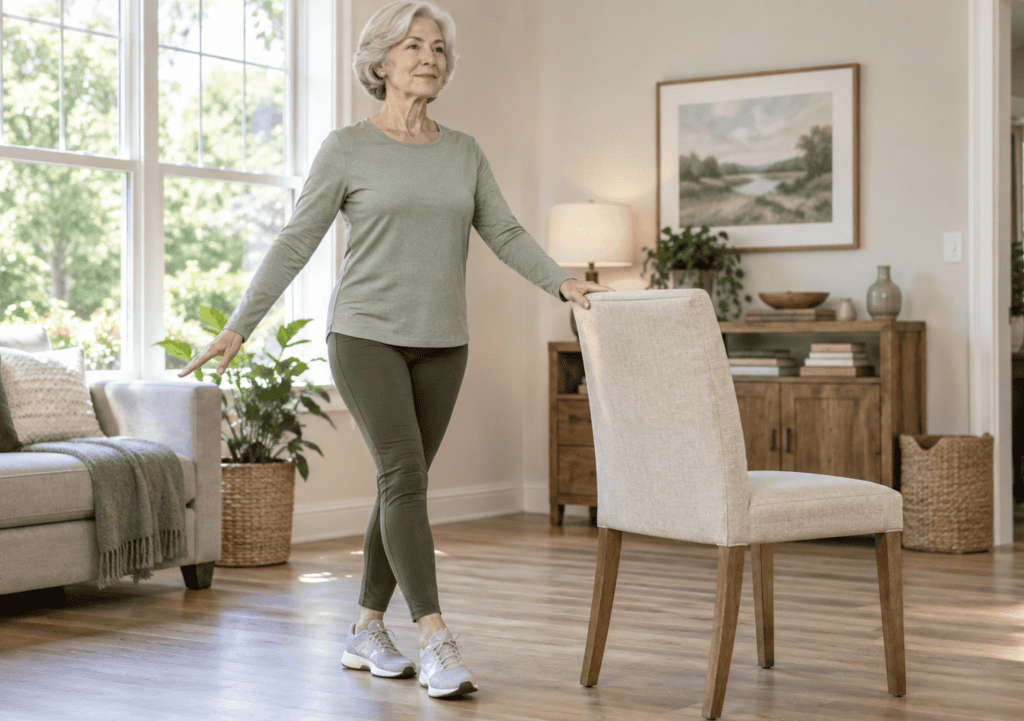
Strong legs and good balance help you recover when you trip or shift your weight unexpectedly. The U.S. Preventive Services Task Force recommends exercise interventions for community-dwelling adults age 65 and older who are at increased risk of falling.
Walking is beneficial for overall health, but fall prevention may also require exercises that specifically challenge strength, balance, and mobility. Depending on your abilities, that might include resistance training, tai chi, supervised balance work, or exercises recommended by a physical therapist.
Our guide to strength training for seniors explains how strength supports mobility and independence.
Consult your healthcare provider before beginning a new exercise program, particularly if you have already fallen, feel unsteady, or have a condition that affects movement.
When to Talk With Your Healthcare Provider
Tell your healthcare provider if you have fallen—even if you were not injured. The CDC reports that fewer than half of older adults who fall tell their doctor, but one fall can be an important sign that something has changed.
Request an evaluation if you:
- Have fallen within the past year
- Feel unsteady while standing or walking
- Worry about falling
- Experience dizziness or lightheadedness
- Have new weakness, numbness, or changes in vision
- Need to push with your hands to stand from a chair
- Have begun limiting activities because you are afraid of falling
- Recently started or changed a medication
A fall-risk evaluation may include reviewing your medications, checking your blood pressure in different positions, assessing your gait and balance, discussing your vision, and determining whether physical or occupational therapy would help.
What to Do If You Fall
Even with good prevention, it is wise to have a plan.
Keep a charged phone, medical alert device, or smartwatch accessible rather than leaving it across the room. Voice assistants can also provide another way to contact someone, although they should not be your only emergency plan.
If you fall:
- Pause and check for pain or injury before trying to move.
- Call 911 if you may have injured your head, neck, back, or hip; cannot bear weight; have severe pain; or take a blood thinner and hit your head.
- If you are not injured and believe you can rise safely, move slowly toward a sturdy piece of furniture.
- Do not repeatedly struggle to stand if you cannot do so safely.
- Tell your healthcare provider about the fall, even if you feel fine afterward.
A fall without an obvious injury still deserves attention. Understanding why it happened may help prevent the next one.
Start With These Five Fall-Prevention Changes
A full home assessment can feel overwhelming. Begin with the improvements most likely to make an immediate difference:
- Clear the main walking paths throughout your home.
- Improve lighting between the bedroom and bathroom and near all stairs.
- Remove or securely fasten loose rugs.
- Install appropriate bathroom grab bars and stair railings.
- Schedule a medication, vision, and fall-risk review.
Then complete the rest of the checklist one room at a time. Fall prevention is not about giving up your independence or changing everything at once. It is about making thoughtful improvements that help you move through your home with greater safety and confidence.
A few changes today can help protect the active, independent life you want to continue enjoying.
And if you’re beginning to think more broadly about aging in place, download the free Age With Intent Aging Well Guide.
It includes practical steps for home safety, healthy living, staying active, and planning ahead—so you can make changes gradually and on your own terms.
Get Your Free Aging Well Guide →
About the Author
I’m Heather, founder of Age With Intent. I have more than 25 years of experience in long-term care leadership, including over 15 years as a Nursing Home Administrator.
Throughout my career, I’ve seen firsthand how important safety, independence, and thoughtful planning are to aging well.
I created Age With Intent to share practical information and resources that help older adults and their families make informed decisions, maintain independence, and live well at every stage of life.