
Creating a Home That Works for You as You Age
Most of us want to remain comfortable and independent in our own homes for as long as possible. But a home that works perfectly today may not always meet our needs as we get older.
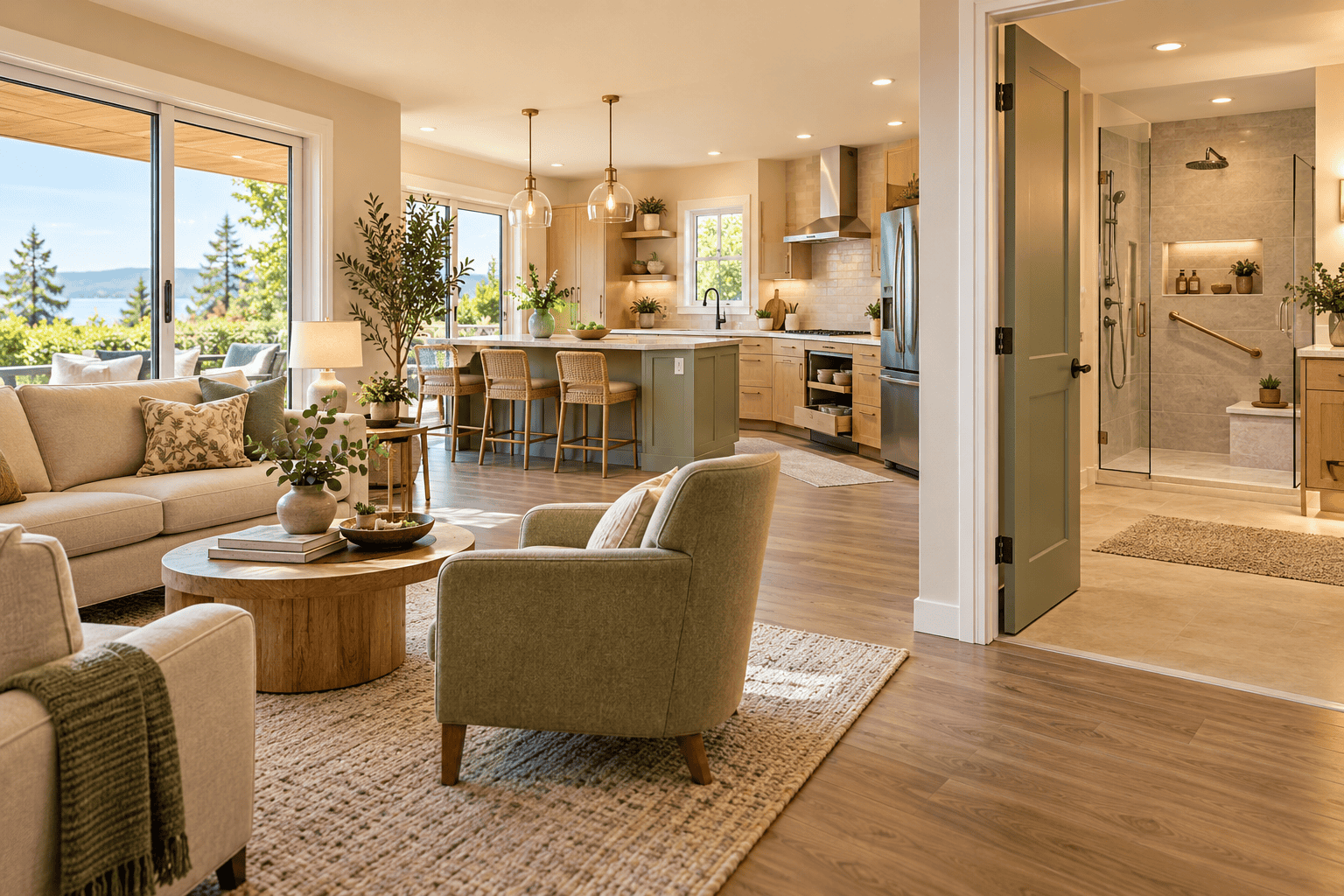
The good news is that creating an age-friendly home doesn’t necessarily require a major renovation. Thoughtful changes to lighting, flooring, furniture, bathrooms, storage, and technology can make everyday life safer and easier while helping you maintain your independence.
And you don’t have to wait until you need these changes. In fact, planning ahead gives you more choices and allows you to make improvements gradually, based on your own preferences and priorities.
An age-friendly home should still feel like your home. Safety and accessibility don’t have to mean clinical or institutional. With thoughtful planning, you can create a space that’s comfortable, attractive, functional, and designed to support you for years to come.
Here are some of the most important areas to consider.
Choose Furniture and Fixtures That Make Everyday Life Easier
The right furniture can make a surprising difference in how comfortable and easy your home is to navigate. Look for chairs with sturdy arms and supportive cushions that make sitting down and standing up easier. For someone who has difficulty rising from a chair, a power lift recliner may provide additional support and independence.
Adjustable beds and seating can also make transitions easier, particularly for people experiencing changes in strength, balance, or mobility.
Don’t overlook everyday fixtures. Lever-style door handles and faucets are generally easier to operate than traditional knobs, particularly if hand strength or dexterity becomes limited. Small changes like these can make everyday tasks easier without changing the overall look and feel of your home.
Examples of thoughtful designs include height-adjustable kitchen counters and grab bars elegantly integrated into bathroom designs. Small changes like these can keep things feeling homey while making life easier for everyone, especially seniors.
Enhancing Safety with Thoughtful Layouts and Modifications
Some areas of the home deserve extra attention when planning for long-term safety. Bathrooms, kitchens, stairs, entrances, and walkways are good places to start.
As an Amazon Associate Age With Intent earns from qualifying sales.
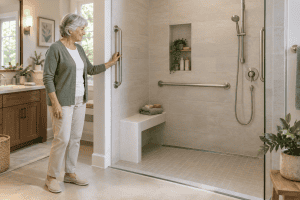
Bathroom: Consider a walk-in or low-threshold shower, non-slip flooring, adequate lighting, and securely installed grab bars. Today’s grab bars are available in attractive finishes that can blend naturally with bathroom fixtures rather than making the room feel institutional.
Kitchen: Keep frequently used items within comfortable reach. Pull-out shelves, drawers instead of deep lower cabinets, and accessible storage can reduce unnecessary bending, reaching, and climbing.
Stairs: Make sure stairways are well lit and have secure handrails. Handrails on both sides can provide additional stability. If stairs eventually become difficult to manage, options such as stairlifts may make it possible to continue using more of the home safely.
Flooring: Keep walking paths clear and look for loose rugs, cords, uneven thresholds, or slippery surfaces that could increase fall risk. If you use area rugs, make sure they’re secured with a non-slip backing.
The goal isn’t to eliminate every possible risk. It’s to create a home that makes everyday movement easier and supports your independence.
Use Technology to Make Home Safer and Easier
Smart home technology can make everyday tasks easier while adding an extra layer of safety and convenience.
Voice-activated devices, such as an Amazon Echo Show, can help control lights, adjust thermostats, set reminders, make calls, play music, and perform other tasks without requiring you to move around the house.
Other helpful technology may include video doorbells, automatic lighting, smart thermostats, medication reminders, and personal emergency response systems.
You don’t need to turn your home into a high-tech showcase. Start with technology that solves a specific problem or makes something you already do a little easier.
The best technology is the technology you’ll actually use.
Safety Doesn’t Have to Sacrifice Style
An age-friendly home doesn’t have to look clinical. In fact, many features that improve accessibility can also make a home more attractive and comfortable.
Open, uncluttered spaces can improve movement while making rooms feel larger and more welcoming. Good lighting—including natural light where possible—can make spaces easier to navigate while creating a brighter, more pleasant environment.
Color and contrast can also be useful. Thoughtful contrast between floors, walls, countertops, steps, and fixtures can make important features easier to see.
Most importantly, keep the things that make your home feel like yours—family photographs, artwork, favorite furniture, meaningful objects, and comfortable gathering spaces.
The goal of age-friendly design isn’t to create a different kind of home. It’s to help the home you love continue working for you.

Start With One Change
Creating an age-friendly home doesn’t have to happen all at once.
Take a walk through your home and look at it with fresh eyes. Where could better lighting help? Is there a rug that tends to move? Would a grab bar make the shower easier to use? Is something you use every day stored somewhere that’s difficult to reach?
Start with one or two changes that would make life safer or easier today. Then continue adapting your home as your needs and priorities change.
Planning ahead isn’t about expecting something to go wrong. It’s about creating more choices for how and where you want to live as you get older.
And for many of us, that means making it possible to stay safely and comfortably in the home we already love.
Looking for products that can make aging at home safer and easier?
Visit our Products We Trust page for recommended home safety, wellness, mobility, and everyday-living products.
Want more ideas for living well and staying independent?
Your Next Step Toward Aging Well
Aging well is about more than staying healthy. It’s about feeling confident, staying independent, and making thoughtful choices for the future.
Our FREE Aging Well Guide offers practical tips for home safety, healthy and active living, and planning ahead—so you can take meaningful steps toward living well at every age.
Get Your Free Aging Well Guide →
Practical guidance to help you live well and age with purpose.
About the Author
I’m Heather, founder of Age With Intent. I have more than 25 years of experience in long-term care leadership, including over 15 years as a Nursing Home Administrator.
Throughout my career, I’ve seen firsthand how important safety, independence, and thoughtful planning are to aging well.
I created Age With Intent to share practical information and resources that help older adults and their families make informed decisions, maintain independence, and live well at every stage of life.





4 Responses
Creating an age-friendly home is such an important topic, and I appreciate the practical advice shared in this post. Small adjustments like better lighting, non-slip flooring, and accessible storage can make a huge difference in maintaining safety and independence. I also love the emphasis on comfort and ease of movement throughout the home. As our population ages, do you think more builders and designers will incorporate these features into standard home designs? It would be great to see more homes built with aging in place in mind. What’s one change you’ve made (or plan to make) for long-term accessibility? Debra
I do think we will see more homes designed and built with aging in mind. I personally have made my home one level, meaning I have the primary bedroom with a bathroom on the first floor and I moved the laundry to a room on the first floor as well. It is much more functional that way. Thank you for comments and questions Debra.
Creating a home that’s accessible and comfortable for everyone, regardless of age, is essential for fostering independence and safety. With small but thoughtful changes, like ergonomic furniture, smart home technology, and safety-conscious layouts, we can make our living spaces more inclusive. The beauty of age-friendly design is that it not only addresses practical needs but also enhances the emotional and physical well-being of all household members. It’s about blending comfort, functionality, and aesthetics to create a home that supports health, connection, and peace of mind.
Thank you for your comments. It is important for people to think this way throughout their lives so they can age successfully.