
Technology has changed the way we communicate, manage our health, and handle everyday responsibilities. And some of those changes can be especially valuable as we get older.
But when it comes to aging in place, more technology isn’t necessarily better.
The real benefit comes from finding tools that solve everyday problems, support independence, and make life a little easier.
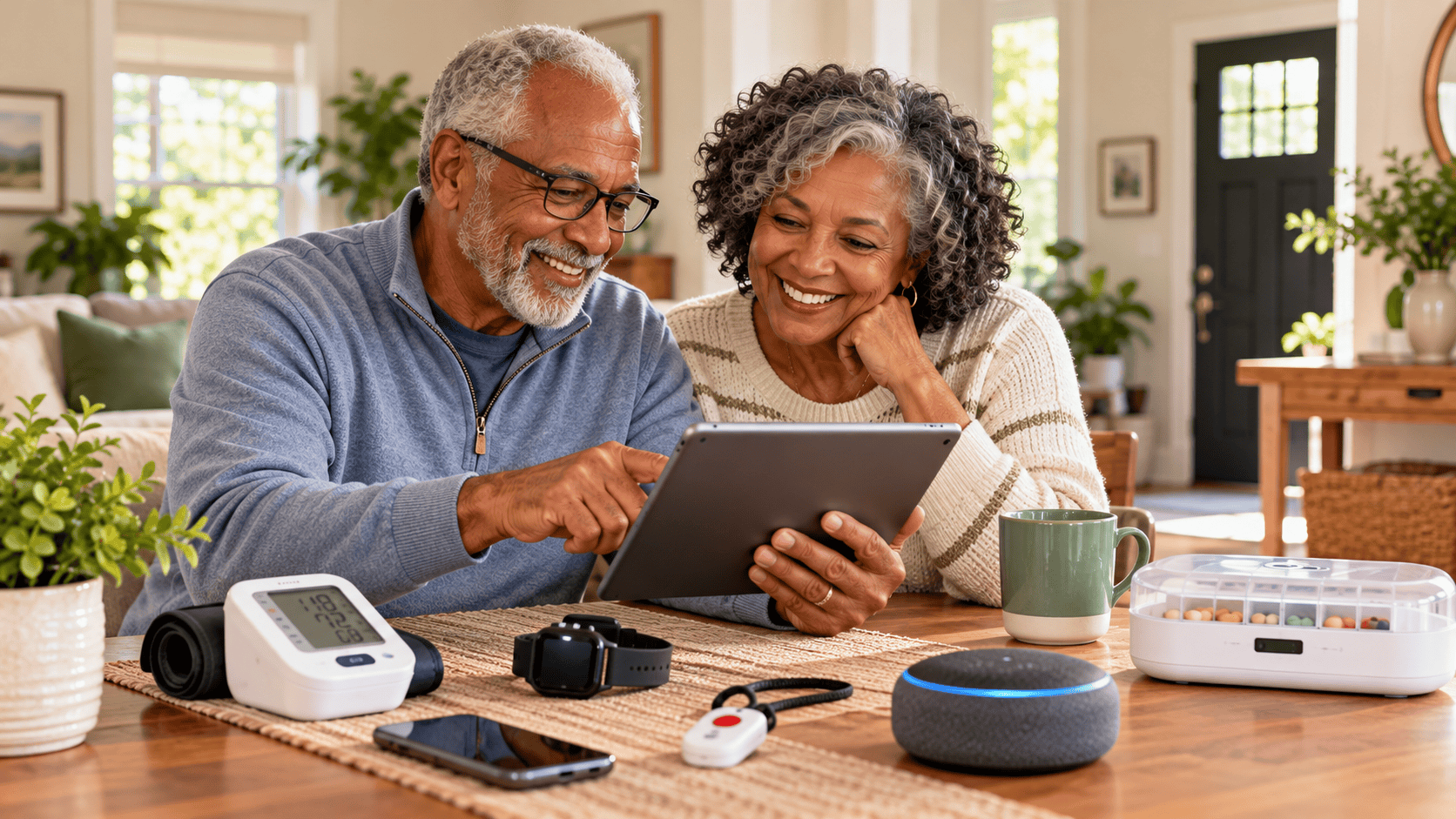
Maybe it’s a medical alert device that makes it possible to call for help after a fall. A blood pressure monitor that helps you track your health. Or a simple tablet that makes it easier to stay connected with family and friends.
None of these devices can replace personal relationships, good healthcare, or a safe living environment.
But when thoughtfully chosen, they can provide valuable support.
Let’s look at five areas where technology can make a meaningful difference—and how to decide which options are worth considering.
As an Amazon Associate, Age With Intent earns from qualifying purchases at no additional cost to you.
1. Medical Alert Systems: Getting Help When You Need It
One of the biggest concerns for someone living independently is what might happen during an emergency.
What if you fall while home alone? What if you become ill and can’t reach your phone?
Medical alert systems are designed to make requesting assistance easier.
Depending on the system, they may use a wearable pendant, wristband, smartwatch, or a home-based device.
How medical alert systems work
Many systems allow you to press a button to connect with an emergency response center or designated contact.
Some also offer automatic fall detection, which may recognize certain types of falls and initiate an alert without requiring the wearer to press a button.
That can be particularly helpful if someone is injured or unable to reach their phone.
However, automatic fall detection has limitations. No system can reliably identify every fall, and some movements may trigger false alarms.
That’s why it’s important to understand exactly how a particular device works.
What to look for in a medical alert system
Before choosing one, consider:
Coverage: Does it work only at home or wherever cellular coverage is available?
Fall detection: Is it included, optional, or unavailable?
Monthly costs: Are there monitoring fees or additional charges?
Battery life: How often must the device be charged?
Water resistance: Can it be worn in the shower?
Ease of use: Can the wearer comfortably activate the alert?
Emergency response: Who receives the alert, and what happens next?
Also consider whether the person will actually wear the device consistently.
Even the most advanced alert system won’t help if it’s sitting on a dresser when an emergency occurs.
What about smartwatches?
Some smartwatches include emergency calling, fall detection, and other safety features.
They may appeal to active older adults who want a multipurpose device rather than a traditional medical alert pendant.
But they often require regular charging, compatible technology, and some familiarity with their features.
The best choice is the one that fits the person’s lifestyle, comfort level, and actual needs.
A medical alert system should provide access to help—not create a false sense that every emergency will automatically be detected.
2. Telehealth and Remote Health Monitoring: Managing Health From Home
Technology is also changing how people communicate with healthcare professionals.
Telehealth appointments allow patients to speak with healthcare providers remotely, often through a smartphone, tablet, or computer.
For someone who lives far from a medical office, has difficulty traveling, or needs frequent follow-up appointments, this can be especially convenient.
What is remote health monitoring?
Remote patient monitoring involves collecting certain health measurements outside a medical setting and sharing them with a healthcare team.
Depending on the individual’s needs, this might include:
Blood pressure
Body weight
Blood glucose
Heart rate
Oxygen saturation
For example, someone managing high blood pressure may be asked to check readings at home and share them with their healthcare provider.
Someone managing heart failure may be instructed to monitor daily weight as part of a care plan.
These measurements can help a healthcare team recognize patterns and determine whether additional evaluation or treatment adjustments are needed.
Helpful home-monitoring devices
Digital blood pressure monitors
An easy-to-read upper-arm blood pressure monitor can be useful for someone whose healthcare provider recommends regular home measurements.
Choose a clinically validated device with an appropriately sized cuff.
Digital scales
A scale with a clear display may be helpful for routine weight tracking.
Connected scales can automatically record measurements, although that feature isn’t necessary for everyone.
Pulse oximeters
These measure estimated blood oxygen saturation and pulse rate.
They may be recommended for certain health situations, but readings can be inaccurate under some conditions and should never be the sole basis for medical decisions.
Glucose monitoring technology
For people with diabetes, blood glucose meters or continuous glucose monitoring systems may be part of an individualized treatment plan.
The appropriate device depends on medical needs and professional guidance.
Technology should support—not replace—medical care
Home-monitoring equipment can provide useful information, but more data isn’t automatically better.
If you’re unsure what measurements matter, how often to check them, or what results should prompt a call to your healthcare provider, ask before purchasing equipment.
It’s also important to understand that insurance coverage varies by service, device, medical necessity, and individual plan.
Shop digital blood pressure monitors on Amazon →
3. Medication Management Technology: Making Daily Routines Easier
Taking medications correctly can become complicated when prescriptions have different schedules or instructions.
Even someone who has managed medications independently for years may occasionally wonder:
Did I already take that pill?
Technology can help reduce some of that uncertainty.
Start with the simplest solution
For many people, a traditional weekly pill organizer and a phone reminder may be all that’s needed.
Others may benefit from additional features.
Medication reminder apps
These can provide scheduled notifications and help track when a dose has been marked as taken.
Electronic pill organizers
Some organizers include alarms or visual reminders.
Automatic pill dispensers
More advanced systems can make scheduled doses available at designated times.
Depending on the model, some may also provide alerts to a family member or caregiver when a dose appears to have been missed.
Who might benefit from an automatic pill dispenser?
These devices may be helpful for someone who:
Takes medications several times a day
Has difficulty remembering whether a dose was taken
Finds a complex medication schedule confusing
Needs additional reminders
Has a family member helping oversee medication routines
But automatic dispensers aren’t appropriate for every medication or every individual.
Some medications require special storage or administration. Others may change frequently, making a preloaded system more difficult to manage.
And even an advanced dispenser cannot guarantee that someone has swallowed the correct medication.
Before purchasing one, review the proposed system with a pharmacist or healthcare professional.
Shop automatic pill dispensers on Amazon →
For more detailed guidance, read our articles Tips for Organizing Medications and Benefits of Using an Automatic Pill Dispenser.
4. Communication Technology: Staying Connected With the People Who Matter
Independence isn’t just about managing physical tasks.
It’s also about maintaining relationships, participating in activities, and feeling connected to the world around us.
Technology can make those connections easier, particularly when family and friends live far away.
Video calling
Video calls allow people to see one another rather than relying entirely on telephone conversations.
They can be particularly enjoyable for connecting with grandchildren, celebrating special occasions, or simply catching up over coffee.
Many smartphones, tablets, and computers already include video-calling capabilities.
Tablets with simplified interfaces
Some tablets offer larger icons, accessible displays, and simplified navigation.
For someone who finds traditional computers frustrating, a tablet may provide an easier way to:
Make video calls
View family photos
Read books
Play games
Send messages
Attend virtual events
Explore hobbies and interests
Smartphones with accessibility features
Modern smartphones often include features such as adjustable text size, voice commands, hearing-aid compatibility, magnification, and emergency contact settings.
A phone doesn’t necessarily need to be marketed specifically to older adults to be a good choice.
The most important consideration is whether the person can use it comfortably and confidently.
Learn more: How to Choose the Right Smartphone for Seniors
Technology can support social connections—but shouldn’t replace them
Video calls and messaging are valuable, but they’re not substitutes for every kind of human interaction.
Whenever possible, technology should help someone maintain friendships, participate in community activities, and arrange in-person visits.
It can also make it easier to discover local events, join interest groups, or stay involved in organizations that matter to them.
The goal isn’t simply to be connected to a device. It’s to stay connected to people and experiences.
5. Everyday Technology: Making Daily Responsibilities More Manageable
Some of the most useful aging-in-place technology isn’t designed specifically for older adults.
It’s technology that makes ordinary responsibilities easier.
Grocery ordering and delivery
Online grocery services can reduce the need to travel to the store, navigate crowded aisles, and carry heavy bags.
For someone who enjoys cooking but finds shopping difficult, this can help preserve an important part of independence.
Meal delivery services
Prepared meal services and meal kits can make it easier to maintain regular meals without doing all the shopping and preparation.
Some community programs also provide meals for eligible older adults.
The best option depends on dietary needs, budget, cooking ability, and personal preferences.
Transportation apps
Rideshare and transportation-booking services can provide additional options for someone who no longer drives or prefers not to drive in certain conditions.
However, availability varies by location, and not every service can accommodate mobility devices or provide hands-on assistance.
Local senior transportation programs may offer alternatives.
Online appointments and services
Many everyday tasks can now be handled remotely, including scheduling appointments, refilling eligible prescriptions, paying bills, and communicating with service providers.
For someone who finds frequent trips tiring or inconvenient, that flexibility can be valuable.
But convenience should always be balanced with privacy and security.
Use trusted services, strong passwords, and appropriate account protections.
Technology is most helpful when it reduces effort without creating unnecessary complexity.
How to Choose Technology That Actually Helps
With so many products and services available, it’s easy to feel overwhelmed.
Before buying anything, start with a simple question:
What problem am I trying to solve?
Maybe the concern is getting help during an emergency.
Maybe it’s keeping track of medications.
Or perhaps it’s staying connected with family members who live several states away.
Once you’ve identified the problem, consider these questions.
Is it easy to use?
A device with dozens of features may not be better than one that does a few important things well.
Look for clear instructions, readable displays, intuitive controls, and dependable customer support.
Does it require internet access?
Some devices depend on Wi-Fi or cellular service.
Consider whether your home has reliable connectivity and what happens when service is interrupted.
Are there ongoing costs?
The purchase price may be only part of the expense.
Medical alert monitoring, cellular service, cloud storage, and certain apps may require subscriptions.
Compare the total cost over time.
What happens if the power goes out?
Think about battery life, backup power, and whether important features continue working during an outage.
Essential safety arrangements should have a dependable backup plan.
Is personal information protected?
Health information, location data, video recordings, and account details can be sensitive.
Review privacy settings, understand what information is shared, and use security features such as multifactor authentication where available.
Will the person actually use it?
This may be the most important question of all.
Technology should fit the person’s abilities, preferences, and daily routines.
Whenever possible, involve the person who will be using the device in selecting it.
A Note for Adult Children and Caregivers
Technology can provide peace of mind when someone you love lives independently.
But it’s important to remember that independence includes having a say in how support is provided.
A medical alert device, connected health monitor, or caregiver notification system should be discussed openly with the person using it whenever possible.
Explain what the technology does, what information it collects, and who can access that information.
Rather than presenting a device as something someone must use, focus on the specific benefit it may offer.
For example:
A medical alert system may make it easier to request help.
A medication reminder may reduce the stress of keeping track of doses.
Video calling may make it easier to see family more often.
Grocery delivery may eliminate an exhausting shopping trip.
The goal should be to support independence, not unnecessarily take control away.
What About Smart-Home Technology?
Smart lighting, video doorbells, voice assistants, and connected thermostats can also make aging in place easier.
However, those devices deserve a closer look of their own.
If you’re interested in technology that helps make your home more convenient, accessible, and comfortable, read our companion article:
Smart Home Technology for Seniors: Making Aging in Place Safer and Easier
It explores practical ways to use smart-home devices without turning your house into a complicated technology project.
Technology Is Only One Part of Aging Well
Technology can make a meaningful difference in how we manage health, communicate, and handle everyday responsibilities.
But it works best alongside other important parts of aging well:
Staying physically active
Maintaining strength and balance
Eating well
Managing health conditions
Keeping the home safe and accessible
Maintaining meaningful relationships
Planning ahead
A medical alert device doesn’t prevent every fall.
A health monitor doesn’t replace professional medical care.
And a tablet doesn’t replace the importance of friendship and community.
These tools are most valuable when they support a larger plan for living well.
Start Small and Build From There
You don’t need the newest technology or the most expensive equipment to benefit from these innovations.
Start with one challenge.
Find a practical solution.
Make sure it’s comfortable to use.
And then decide whether another tool would make everyday life easier.
Aging in place isn’t about surrounding yourself with gadgets.
It’s about making thoughtful choices that help you remain safe, connected, confident, and independent in the home and community you love.
Keep Planning for a More Independent Future
Technology is just one piece of preparing for the years ahead.
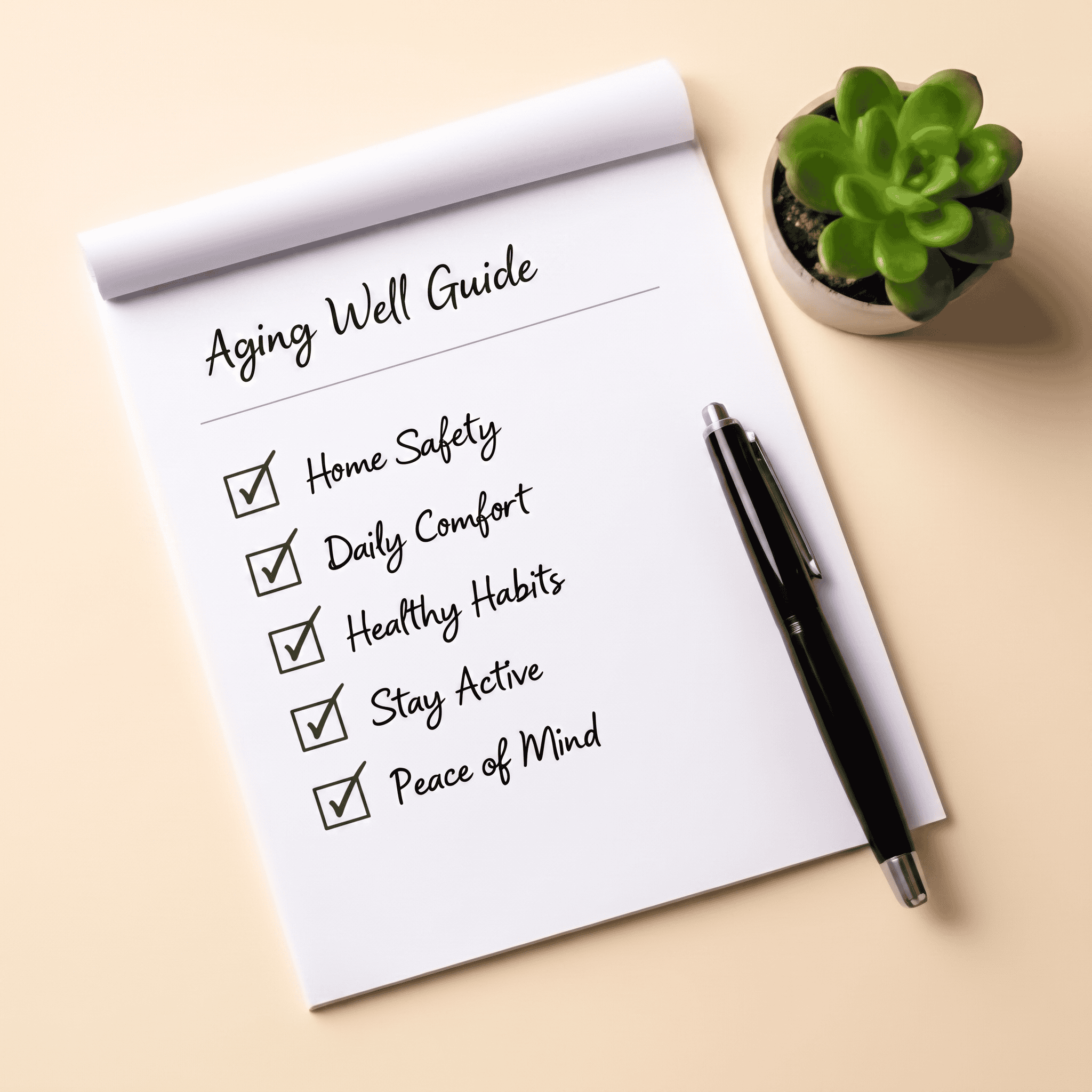
If you’re looking for practical ways to improve home safety, stay active, maintain your health, and plan for the future, download our free Age With Intent Aging Well Guide.
It’s designed to help you take small, manageable steps toward living well at every stage of life.
Get Your Free Aging Well Guide →
Sources & Further Reading
National Institute on Aging — Aging in Place: Growing Older at Home
National Institute on Aging — Telehealth: What Is It, How to Prepare, Is It Covered?
Centers for Disease Control and Prevention — Older Adult Fall Prevention
Federal Trade Commission — Online Privacy and Security Resources
About the Author
I’m Heather, founder of Age With Intent. I have more than 25 years of experience in long-term care leadership, including over 15 years as a Nursing Home Administrator.
Throughout my career, I’ve seen firsthand how important safety, independence, and thoughtful planning are to aging well.
I created Age With Intent to share practical information and resources that help older adults and their families make informed decisions, maintain independence, and live well at every stage of life.





6 Responses
My mum recently had a knee replacement operation and although I know some folk require these at much younger ages, the experience really brought it home to me that my mum is getting older and more frail and frankly vulnerable. She is fortunate that we don’t live too far away, in fact only a couple of miles so we are on hand for hospital visits and shopping but my mum is not ready to give up her independence yet, although temporarily she is not permitted to drive.
I was reading this article with great interest, ticking off the things we have in place for her already and then you mentioned the food delivery service and something just clicked for me. As I say, my mum is lucky she has family close by but for anyone without friends or family to shop for them I think this is a brilliant idea. As you point out, older folk living alone won’t always cook for themselves and don’t eat nutritious food any more. A weekly delivery would ensure they had quality fruit vegetables and protein without having to rely on others to shop for them. It would also give them something to look forward to each week, and a reason to plan meals and eat properly. Having a real human being drop by once a week would also be another pair of eyes just making sure that elderly relative is ok.
Thank you, I am going to show this article to my mum and see what she thinks of the idea. I know that she feels like she is losing her independence having me pick groceries up for her. A service like this is exactly what she needs right now. Thank you
HI Ally,
Thank you for reading! That is exactly what this service could do for you and her. She won’t feel like she has to “put you out”. I’m sure it is hard for her to rely on you when she is used to having her independence. Hopefully it helps. Let me know how it works out.
Thanks,
Heather
Thank you so much for this information! My mother is not exactly elderly at age 63 however, she is handicapped and has many health issues. The fact that she insists on living in her home alone can be a huge challenge for me since getting to her to help requires a 40 minute drive one way.
My mom requires several daily medications that she can at times have a hard time keeping track of. A medication management system might be perfect for her.
She is also paralyzed from the armpits down and transfers back and forth from a bed to an electric wheelchair daily. She has fallen during transferring in the past and now I continuously worry about what might happen in the future if she were not able to quickly get help should it happen again. I am definitely going to look into what fall alarm systems are available. Having something like this in place would really put my mind at ease. Thanks again!!
Shannon,
I am so happy you found value in this information. I know it must be a challenge for you to help your Mom from a distance. Thank goodness she has you! I admire her for being as independent as she can be. Hopefully some of these products can make her life easier and yours a little less stressful!
Heather
9. Hello Heather!
There are a lot of articles on the web but most of them are money-related. Who has the time to think about our aged relatives? So I thank you so much for this article. This is horrible to know that there will be over 2 billion people aged over 60 by 2050!!! By the way, people of this age are mostly suffered from various diseases and they need proper medications. So medication reminder will be so helpful for them. Also not at all to say about the Emergency Pendants. This is so helpful for them. Thanks again to share an article like this.
Thanks for your comments! Isn’t it amazing – the rate the population is aging!? I was just reading another article that was taking about the new life expectancy rising to 115 years old within the next 10 years. It is the first time I have heard that and I certainly haven’t verified it to be true but… wow! That is something to think about!