
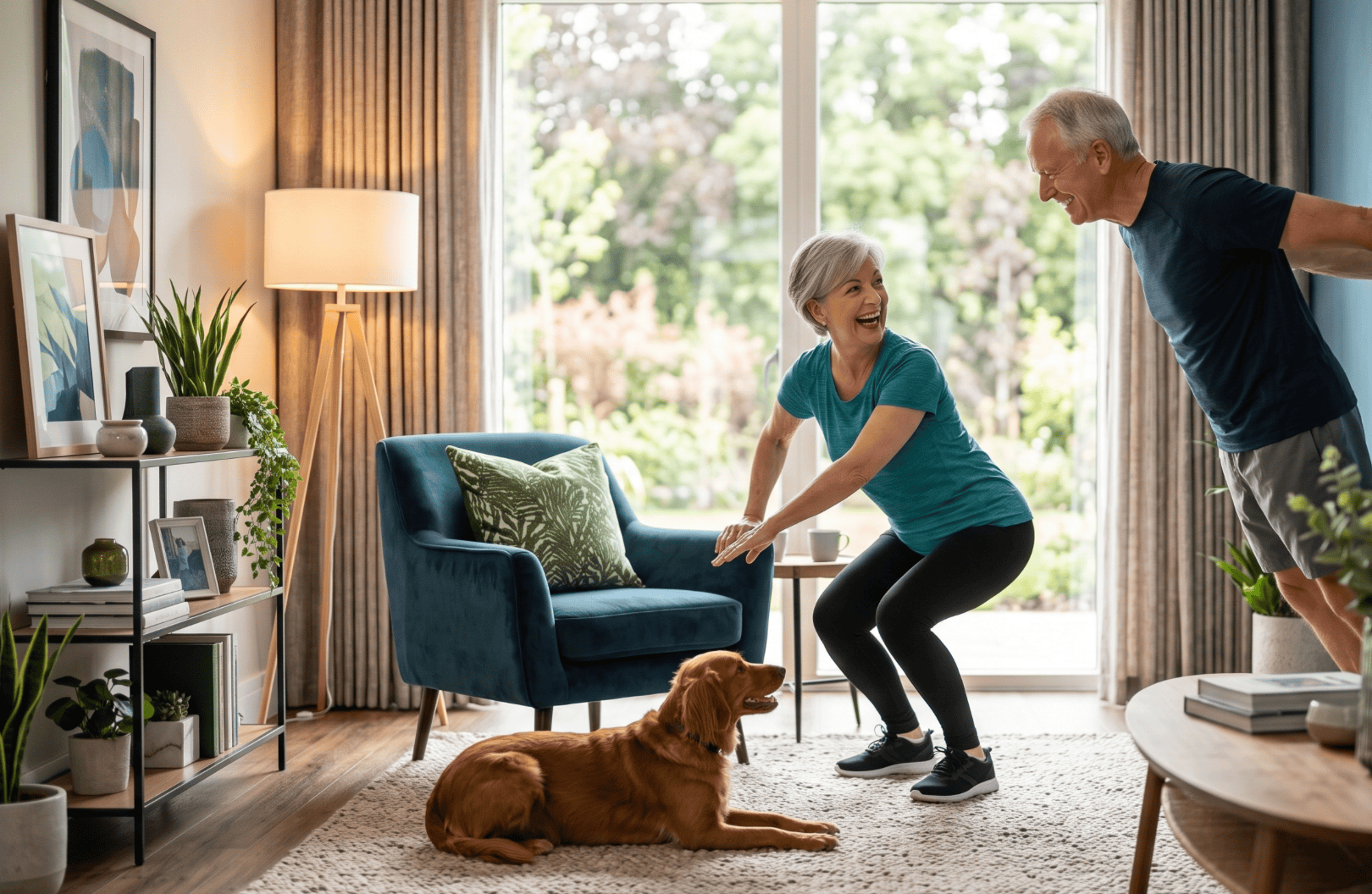
Strength training plays an important role in helping seniors stay active, independent, and energetic. It helps build muscle, strengthen bones, improve balance, and support joint health. Staying strong as we age can support balance, mobility, and our ability to perform everyday activities. The best part is, there are plenty of effective exercises that can be done safely at home without needing a gym or expensive equipment.
As an Amazon Associate I earn from qualifying purchases.
Why Strength Training at Home Works for Seniors
Sticking with strength exercises is easier when you can work out at home. You don’t need a lot of space, and you get to work out where you feel most comfortable. Home workouts save money because you don’t have to pay for a gym membership, which can get pricey. Staying home also removes the stress of traveling and lets anyone fit these strength training exercises for seniors at home into their own schedule, making it easier to keep up with the routine. Many moves can be done with just body weight, resistance bands, or even simple household items like chairs or water bottles. Plus, being in a familiar environment helps you stay relaxed and more likely to stick with the routine.
Safety Tips Before Starting
Being careful is really important, especially if you are new to strength training or have not exercised in a while. Before starting any new exercise program, check with your doctor if you have any health concerns. Warming up with five to ten minutes of gentle marching, stretching, or arm swings helps get your body ready and lowers the risk of injury. Make sure to use slow, steady movements and begin with your own body weight before trying resistance bands or light dumbbells. Stopping right away if you feel pain, dizziness, or shortness of breath is a smart way to stay safe. If you feel unsure about an exercise, skip it or find another option that feels better for your body. I’ve included tips below for beginner strength exercises for seniors. Wearing comfortable, supportive shoes and keeping the exercise area clear of obstacles can also help prevent accidents.
10 Best Strength Training Exercises for Seniors at Home
- Chair Squats
Muscle groups: Thighs, hips, and glutes.
Why it’s beneficial: Chair squats help build strength for daily activities like getting in and out of chairs or cars. They’re easy to do anywhere you have a sturdy chair.
How to do them: Stand with feet shoulder width apart in front of a sturdy chair. Bend your knees and slowly lower yourself toward the seat as if sitting, keeping your weight in your heels and your back straight. Tap the chair with your bottom without fully sitting, then push through your heels to return to standing.
Beginner tips: Use a chair with armrests for extra support if needed. You can also use a countertop to help with balance.
Sets and reps: 2-3 sets of 8-12 repetitions. - Wall Push-Ups
Muscle groups: Chest, shoulders, arms, and core.
Why it’s beneficial: Wall push-ups generally place less stress on the joints than traditional floor push-ups. They build upper body strength and support posture.
How to do them: Stand facing a wall and place hands flat on the wall at chest height, a little wider than shoulder width. Bend your elbows and lower your chest toward the wall, keeping your body in a straight line. Push back to the starting position.
Beginner tips: Take a step closer to the wall if it feels too hard, or further away for a bigger challenge.
Sets and reps: 2 sets of 8-15 repetitions. - Standing Calf Raises
Muscle groups: Calves and ankles.
Why it’s beneficial: This move strengthens lower legs, which can support walking, climbing stairs, and balance.
How to do them: Stand tall and slowly rise up onto toes, lifting heels as high as you can. Pause, then lower heels back to the floor.
Beginner tips: You can hold onto the back of a chair or a countertop for balance if needed.
Sets and reps: 2-3 sets of 10-15 repetitions. - Resistance Band Rows
Muscle groups: Upper back, biceps, and shoulders.
Why it’s beneficial: This exercise helps you maintain strong posture by strengthening back and arm muscles.
How to do them: Sit or stand and loop a resistance band around your feet or a sturdy anchor. Hold the ends, pull your elbows back, and squeeze your shoulder blades together. Then return to the start.
Beginner tips: Use a lighter band to begin. If a band is not available, water bottles can work as a substitute for light resistance.
Sets and reps: 2 sets of 8-12 repetitions. - Seated Knee Extensions
Muscle groups: Thighs (quadriceps).
Why it’s beneficial: Knee extensions are gentle on stiff joints and help build strength for standing and walking.
How to do them: Sit in a chair with feet flat on the floor. Lift one foot, straightening the knee as much as possible without locking it, then lower it back down. Repeat on the other leg.
Beginner tips: Keep movements slow and controlled. You can pause at the top for a stronger squeeze.
Sets and reps: 2 sets of 10-15 repetitions per leg. - Step-Ups
Muscle groups: Thighs, hips, and calves.
Why it’s beneficial: Step-ups mimic the motion of climbing stairs, which is useful for everyday movement and balance.
How to do them: Stand in front of a sturdy step or low platform. Step up with one foot, bring the other foot beside it, then step back down and repeat. Switch the lead leg halfway through.
Beginner tips: Use a step that’s not too high and hold on to a railing or wall for balance.
Sets and reps: 2 sets of 8-12 repetitions per leg. - Glute Bridges
Muscle groups: Glutes, hips, and lower back.
Why it’s beneficial: Glute bridges make your hips more stable, support your back, and improve balance when walking.
How to do them: Lie on your back with bent knees and feet flat on the floor. Squeeze your glutes and lift your hips toward the ceiling, keeping your shoulders on the floor. Then lower your hips to the start.
Beginner tips: If you need extra support, press your arms into the floor. Stop if your lower back feels sore.
Sets and reps: 2-3 sets of 10-12 repetitions. - Bird Dog
Muscle groups: Core, lower back, shoulders, and glutes.
Why it’s beneficial: Bird dog helps develop stability and balance and makes your back and core stronger.
How to do them: Start on hands and knees. Extend one arm forward and the opposite leg back, keeping your back flat. Hold, then return to the start and switch sides.
Beginner tips: You can start by just moving one limb at a time if both feels hard, then try the opposite arm and leg.
Sets and reps: 2 sets of 8-10 repetitions per side. - Standing Side Leg Raises
Muscle groups: Outer thighs and hips.
Why it’s beneficial: This move helps strengthen hip muscles, improve balance, and may even protect against falls.
How to do them: Stand tall and lift one leg out to the side without tilting your body. Keep your toes forward and your core tight. Lower and repeat with the other leg.
Beginner tips: You can hold onto a chair or counter for balance.
Sets and reps: 2 sets of 10-15 repetitions per leg. - Farmers Carry
Muscle groups: Grip, shoulders, arms, and core.
Why it’s beneficial: This exercise improves grip and builds functional strength for carrying groceries or laundry.
How to do them: Hold a weight (like a full water bottle or small bag) in each hand and stand tall. Walk a short distance while keeping shoulders back and core engaged.
Beginner tips: Choose light weights to start. You can even use canned foods if that’s what you have.
Sets and reps: 2-3 carries of 20-30 seconds or 10-20 steps each.
Sample Routine: How to Put These Moves Together
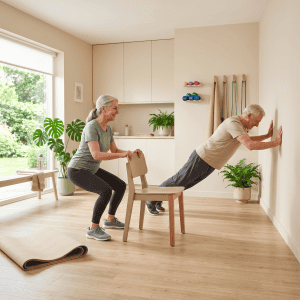
When starting out you may ask “What is the best strength exercise for seniors?”. The best answer is that you should mix four or five of these exercises into one short session every two or three days. For example – do chair squats, wall pushups, standing calf raises, resistance band rows, and glute bridges. Warm up for 5-10 minutes, then do each exercise for the recommended reps and sets, taking breaks as needed. After finishing, spend five minutes stretching your legs, arms, and back. As you grow stronger, add more moves, sets, or days based on how you feel. Consistent practice will help you feel more stable and confident in your movements. Keeping a simple exercise log or journal helps for tracking progress and seeing your progress keeps you motivated. You can mix in the exercises that make your routine work for you and that keep you motivated.
Common Mistakes and How to Avoid Them
- Skipping the warm-up:
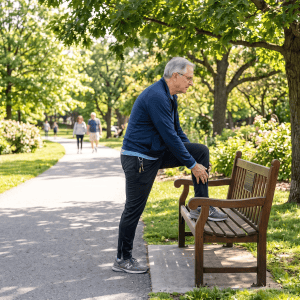 This can raise the risk for muscle soreness or injury. Always take time to warm up.
- Using weights that are too heavy: If you can’t control the movement or if you feel pain, the weight is likely too much. It’s much better to pick lighter weights and focus on good form.
- Holding your breath: Remind yourself to breathe out on effort and in on the easier part of the movement.
- Rushing: Fast repetitions don’t mean better gains. Take your time and focus on technique.
- Overdoing it: It’s tempting to do too much too soon. Give your body enough time to recover between sessions and increase the workload gradually.
- Neglecting recovery: Proper rest, sleep, and hydration gives muscles the chance to adapt and get stronger. Listening to your body is key.
Frequently Asked Questions
Can I really build muscle after age 60?
Yes, older adults can build and maintain muscle through regular strength training. Maintaining a routine including strength exercises after 60 is important to your overall health. It’s never too late to start, and even modest gains have a big impact on daily life and independence.
What if I have joint pain?
If an exercise causes discomfort, stop and try a gentler version. Chair-based or lower impact moves are usually good alternatives, and talking with a physical therapist can be helpful. Learn more about osteoarthritis here.
How often should I do strength exercises?
Two or three times per week is a good goal for most seniors. Rest days help muscles recover and grow stronger. Consistency is more important than intensity, especially when first starting out. That is why home strength exercises for older adults can offer an easy-to-accomplish routine.
Is equipment needed?
No, many exercises use just body weight. If you like, you can add resistance bands or light hand weights for more challenge. Household items can easily stand in for exercise gear.
Can strength training help with balance?
Definitely. Moves like chair squats, calf raises, and bird dog build better balance and support your ability to move confidently. Improved balance means a reduced risk of falls and injuries.
Building Confidence with Strength Training
Starting with one or two of these exercises and building up slowly is a great way to feel comfortable and successful. Over time, these simple moves make daily tasks easier, improve energy, and can help you stay active and independent for longer. Every bit of effort adds up, and I find that a steady, patient approach leads to real results that have an impact in everyday life. If you ever feel unsure, ask a friend or professional for support. Remember, persistence pays off, and each step brings you closer to a healthier, stronger you.
Ready to learn more? Read my article about the benefits of strength training for seniors to discover how building strength can improve balance, independence, and overall health.
Your Next Step Toward Aging Well
Aging well is about more than staying healthy. It’s about feeling confident, staying independent, and making thoughtful choices for the future.
Our FREE Aging Well Guide offers practical tips for home safety, healthy and active living, and planning ahead—so you can take meaningful steps toward living well at every age.
Get Your Free Aging Well Guide →
Practical guidance to help you live well and age with purpose.
About the Author
I’m Heather, founder of Age With Intent. I have more than 25 years of experience in long-term care leadership, including over 15 years as a Nursing Home Administrator.
Throughout my career, I’ve seen firsthand how important safety, independence, and thoughtful planning are to aging well.
I created Age With Intent to share practical information and resources that help older adults and their families make informed decisions, maintain independence, and live well at every stage of life.





4 Responses
I like that these exercises focus on improving everyday movement rather than just building muscle. Simple activities like standing up from a chair, climbing stairs, and maintaining balance become much easier with consistent strength training. I’m 43, and have already experience pains on my lower back since 2020. No medicine helps heal the pain whatesover so far.
Have you received feedback from readers who have followed this routine, and if so, what changes did they notice first?
Thank you for your comment John. Yes, I’ve spoken with many people who use this or a similar routine and the changes are impressive. This routine makes you feel steadier standing, walking and moving around in general. I think the biggest benefit is gaining confidence in ones ability to complete tasks independently.
Excellent article! I appreciate that the focus is on functional strength rather than just lifting heavier weights. Exercises that improve balance, mobility, and everyday movements can make a huge difference in maintaining independence as we age. The emphasis on proper form and gradual progression is especially valuable. Thanks for sharing such practical and encouraging advice!
Thank you for reading and commenting. My hope is that people will realize they just need to get moving. No need to worry about using weights at all to start – using your own body weight is an effective way to build strength and mobility.